


TALK ABOUT FAKE NEWS

Updated: May 11
"Fake news,” has become a common refrain of President Trump and other politicians lately. Sometimes what is tagged in the media as possible fake news is a story or misinformation plot planted by Russia or some other adversary and even a bot. But often, what politicians refer to as “fake news” today is a news story with a slant or opinion they believe is wrong, though seldom is the news completely fake or made up.

The same could not be said of “reporting” in the time of our founding fathers.
In 1776, people got their news from gossip in the taverns and shops (think of it like their social media with a much smaller footprint). As you could probably guess, what was eventually “reported” ended up bearing little resemblance to the original message, like the old post office game.
Beyond that, most locals in New York or Boston or Philadelphia obtained their “news” from periodical publications like broadsheets or early newspapers.
Many of these papers have been lost to history but a number have survived to give us an accurate look into what passed for news. Rather than simply reporting an event—think the Boston Massacre or the Battle of Bunker Hill—with a particular slant reflecting either British or patriot sympathies, these publications often simply invented the story. This reporting may or may not have any relationship to the truth. Then, the publisher would add some sensational headline.
LAWLESS RIOTERS SACK BOSTON

This was true of papers supporting either side, loyalist or rebel. Lost battles would be recorded as great victories, votes reported as usurping authority, blatant cruelties by soldiers upon locals touted as necessary military action, an orderly retreat became a victorious rout.
Like today, these sensational stories served to inflame the reader, whip up a certain sentiment, create a frenzy against “British trampling liberty” or “Savage rebellion against our kind sovereign”—pretty much the same as the algorithm on social media platforms. Whatever it took to sell more papers. In 1776, there was not even an interest in coming close to the truth, unless it fit their purpose.
A few actual headlines I think will illustrate.
ROYAL NAVY CRUSHES REBELLION
Actual: A few British ships won a battle with rebel smugglers. This had little effect on the “rebellion.”
BRITISH FLEET MENACES HARBOR, LIVES IN PERIL
Actual: The British began enforcing a blockade of Boston harbor.
CONFUSION AND COWARDICE:
BRITISH FORCES HARASSED AT CONCORD
Actual: Outnumbered patriots fought British in the Battle of Concord.
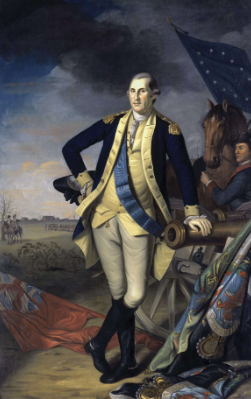
Many of these ludicrous headlines and stories were aimed at Washington.
WASHINGTON’S GUERRILLA TACTICS UNDERMINE CIVIL ORDER
Actual: The strategy developed by Washington of short hit-and-run strikes was proving very successful, with British troops always wondering when the next attack might hit them.
Some interesting examples of colonial “fake news” came from an influential loyalist paper published by James Rivington called the Royal Gazette. Thanks to work by historians, we have quite a few issues of this “newspaper” in archives. My favorites from this collection revolve around George Washington, a frequent target of the publisher.
WRETCHED USURPER WASHINGTON
PROCLAIMED KING
TYRANT IN PHILADELPHIA:
WASHINGTON WEARS A FOREIGN CROWN.
Actual: The stories accompanying these headlines, and others like it, held no “news,” only lies and fabrications intended to get readers in an uproar, loyalists in defiance, rebels in disbelief. However, they were successful in their primary goal—selling papers.

I found what I researched about the Royal Gazette paper so interesting that I decided to include it in my new novel, ABIGAIL TRENCH, using the actual articles and headlines. My new historical thriller traces the story of the lone female operative of Washington’s secret spy ring that helped to win the Revolutionary War. ABIAGIL TRENCH will launch next month (6/9/26) published and distributed by Diversion Books and Simon & Schuster. I can’t think of a better way to celebrate the nation’s 250th anniversary of the Declaration of Independence than reading the captivating story of one of the unsung heroes of the fight for independence. Interested? You can check it out here.


Comments