


George Washington, a Complicated Man

Some of what I’m to share here may upset some readers and for that I apologize. First of all, let me say George Washington was a great leader and perhaps the most important founding father. There is little question about that.

But, I leaned from the extensive research into the American Revolution I did for my new novel, ABIGAIL TRENCH, George Washington was not the myth he's been made out to be. He was truly human, vulnerable, full of faults and contradictions.
First, the undeniables. He was the General and Commander-in-Chief of the Continental army. He was the first, and many say our best president (with apologies to Abraham Lincoln). Without a doubt, he was the singular leader of the founding fathers, tall, soft-spoken, commanding.
But he was also human.

For example, by any of today’s standards, Washington was no great general. In fact, he lost more battles than he won. As the Revolutionary War dragged on, what Washington did better than anything else was run away. He was quite intelligent and realized, in most cases, his rag tag army was not a match for trained British regulars. So he developed new guerilla tactics where he would draw small groups of Redcoats out, defeat them and disappear into the woods to fight another day.
He was also a great strategist and organized the Culper Ring, the secret spy ring that helped win the Revolutionary War, an entirely new approach to spycraft. But he was definitely not much like our famous generals—Grant, Eisenhower, MacArthur, Swartzkoff—though his strategy and war plan was what worked for the time and place.
Men and women looked up to him and Washington was able to inspire them to get through the darkest times of the Revolution. I’ve written a scene in my new novel, where Abigail gets the chance to meet the man and is thoroughly enthralled, like everyone else. Washington was also an astute politician, probably just as important a skill as leading his troops, as he had to battle the Continental Congress as well as the British army to win the war.
George Washington was a complicated man.

He embodied the beliefs of the Revolution and provided the leadership the country desperately needed to emerge from thirteen different colonies and become a new country. But, he was also a dedicated slave owner who owned about 300 slaves at his Mount Vernon Estate. And who went to great lengths to protect his property, sending slave hunters all over the colonies to track down a slave who escaped, Ona Judge, and try to bring her back. The slave hunters failed, by the way.
He believed in the destiny of the country but was also a committed entrepreneur. Among his many talents, Washington was a surveyor and tried to claim a large portion of what would become the Louisiana Purchase as his own property, an extension of his Virginian estate. He had abrasive partisan battles with politicians he disagreed with—Jefferson, John Adams, Thomas Paine and Patrick Henry—not that much different than today’s politicians.
In other words, he was human. But, there is little doubt we would likely not win the Revolution, give birth to a new nation and become a beacon to the free world if George Washington had not been there to lead us in 1776.
He was one remarkable man but human just the same. I believe the human Washington is far more remarkable than the mythical one.
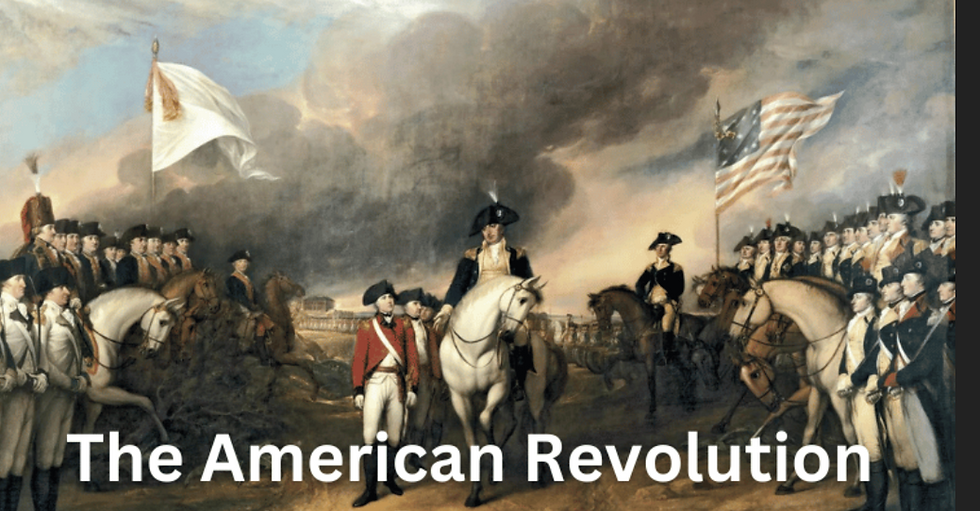
As we celebrate what Washington and all the Founding Fathers achieved during our 250th anniversary, it would serve us well to remember they accomplished everything not because they were legends but because they were human—talented, dedicated, committed—but still, very much human.


Comments